I spent 13 years on the distributor side before I started PromoPilot, and I still come back to one simple point: promotional products work.
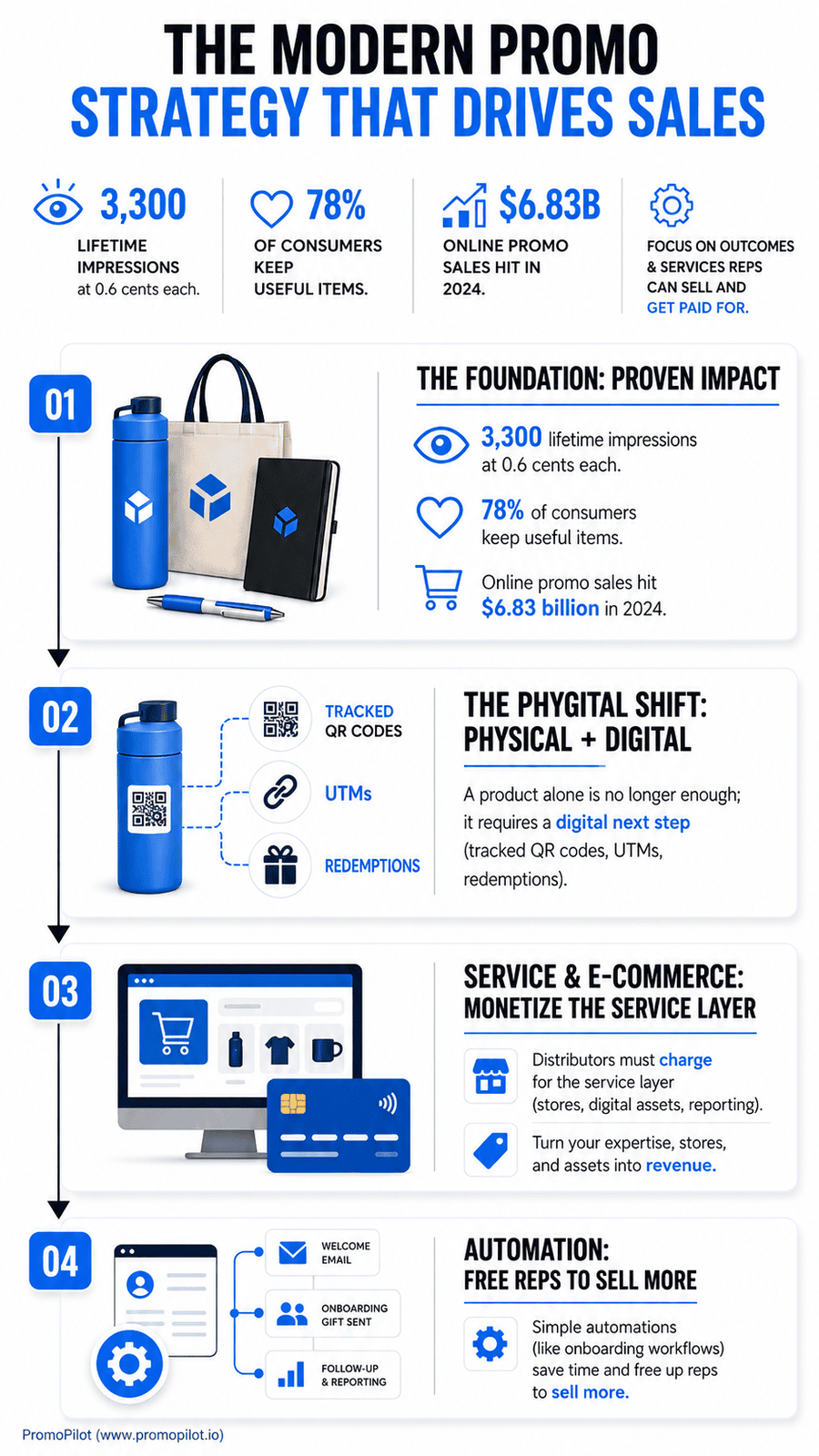
ASI's latest study shows promo items generate an average of 3,300 lifetime impressions and cost about 0.6 cents per impression. ASI also found 75% of U.S. consumers have a positive opinion of promotional products. That is a strong medium. It still earns attention. It still sticks around. It still shapes how people feel about a brand.
But "effective" has changed.
A product by itself is no longer enough. The strongest programs have a useful item, a clear next step, and a way to measure what happened after the handoff. That is where reps can separate themselves.
I often describe a workflow as a story that is being told. Good promo works the same way. The product is the trigger. It opens the story. Then something needs to happen next. Maybe that is a store visit, a landing page, or booking a demo.
This matters for your clients, therefore it should matter to you.
So let's talk about how to use promotional products effectively now, in a way that gets better results for clients and gives you more room to go sell.
Promo Still Works Because It Is Useful, Visible, and Memorable
Useful Wins
Useful wins more often than clever.
ASI found 78% of consumers keep a promotional item because it is useful to have. That should shape what you recommend. If the product has no real place in somebody's life, the campaign has to work much harder.
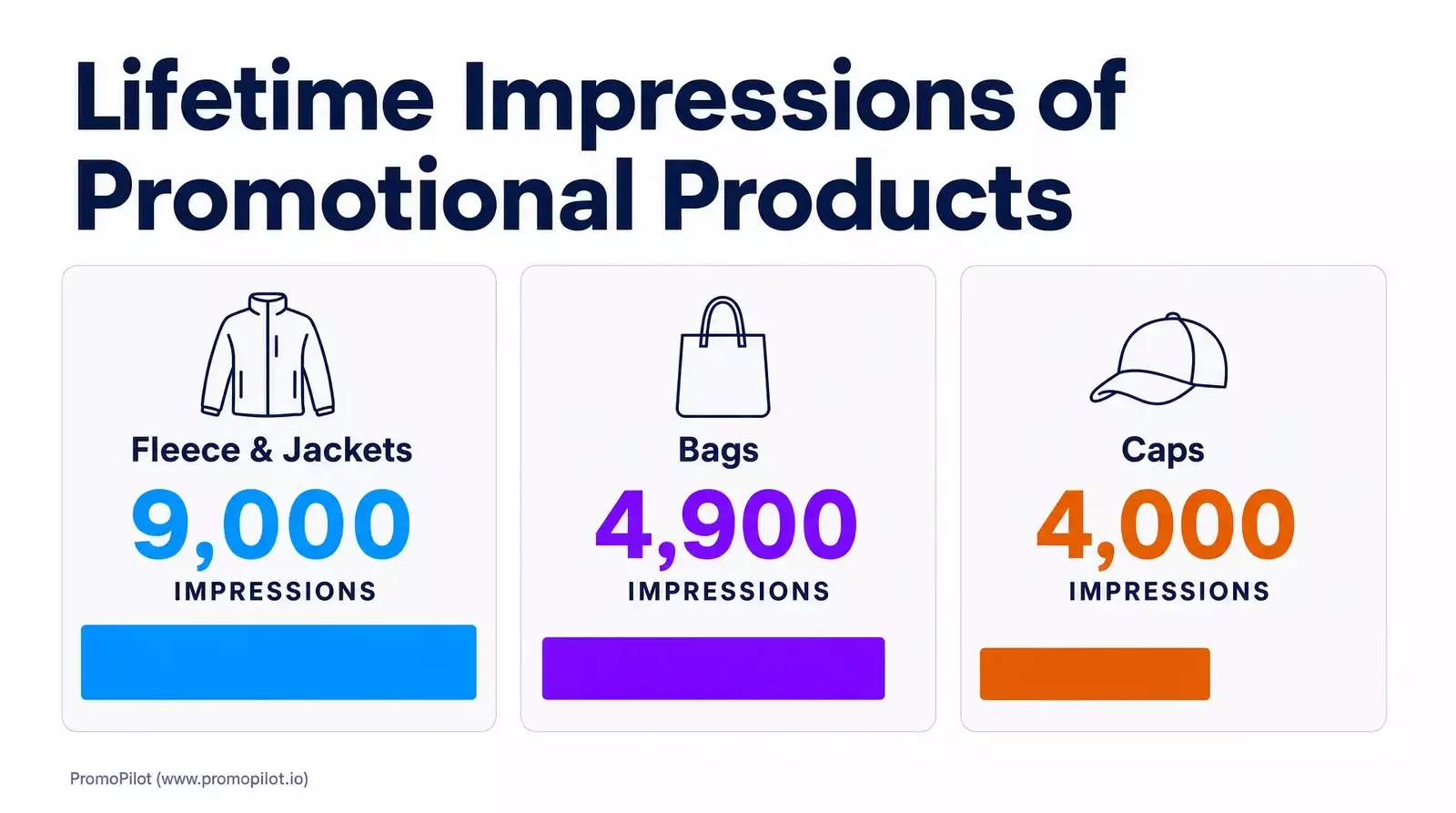
This is one reason apparel, bags, and other visible items keep doing well. ASI estimates fleece and jackets generate about 9,000 impressions over their lifetime, while bags generate 4,900 and caps 4,000. People wear them. Carry them. Set them down in front of other people. The product keeps doing work after the invoice is paid.
Promo also moves perception. ASI found 76% of U.S. consumers said they would be more likely to do business with an advertiser after receiving a promotional item, and 78% said they would have a more favorable view of that advertiser. Those are not small numbers.
Make the Moment Continue
The item should create a moment. As your client's merch expert, you have the opportunity to help that moment continue.
That matters a lot at events. PPAI says 75% of consumers agree promotional products received at events make the experience more memorable. Great. Now give that memory a next step. Send them somewhere. Ask for something simple. Offer something useful. Capture the engagement.
The same logic applies to direct mail. USPS found advertising mail sent to existing customers was 64% likely to be read and had a 25% "very likely to respond" rate. If your client is mailing current customers, that is a real opportunity. Tie the piece to a tracked landing page or pURL, or a digital destination and you have a much stronger story to tell.
Start with the Outcome, Not the Item Number
A lot of discovery in promo starts too low. People jump straight to the product. They ask about budget, timeline, and colors before they ask what the client is actually trying to make happen.
I would start higher.
Ask what the recipient should do next. Ask what behavior the client wants. Ask what would make the campaign feel successful three weeks later. If you start there, product choice gets easier and the digital pieces make more sense.
If the goal is employee onboarding, the next step may be a repeatable onboarding experience tied to new hires. If the goal is event follow-up, the next step may be a landing page with a clear call to action. If the goal is awareness with proof, the next step may be a tracked QR code that shows traffic and conversion.
Keep the Language Plain
You do not need technical jargon to sell any of this.
If you are talking to HR, say, "We can make it easy for your team to send store credit without emailing us every time." If you are talking to marketing, say, "We can give you a simple scan so you can see who engaged and what they did next."
Focus on the outcome. If they ask about a feature, then map a solution you already know and solve for to an outcome. That keeps the conversation clear.
I also think reps can hurt themselves when they rush discovery. When that happens, you risk misalignment between what the client expects and what you're really offering. That is how uncomfortable conversations show up later. I would much rather slow down the sales process, but be aligned with what the customer is expecting and what we can deliver, than quickly jump to a contract that we can't fulfill.
Charge for the Service Layer
This is one of the biggest misses I see in our industry.
Reps will work hard to win the merchandise order, then give away the service side to make the deal feel easier. They toss in the company store. They toss in the redemption site. They toss in reporting. Then the team spends a lot of time building and running all of that work for free.
That creates two problems. You train the customer to think the service has no value. And you leave real revenue on the table.
I have spent years building company stores and e-commerce programs. They take planning, setup, content, testing, and maintenance. There is real work there. The same goes for digital asset services and campaign reporting. If you bury all of that effort inside the product margin, you create an operational margin drain.
Service Pricing Feels Uncomfortable. I Get That.
A lot of reps are comfortable selling products because the pricing is coded and familiar. There is a margin. There is a process.
Service work is different. There is no coded pricing for many service-related SKUs.
I felt that myself early in my career when I was working on a direct mail campaign with an augmented reality component. The physical item was simple. The heavier lift was the digital experience behind it. There was no clean industry formula telling me what that service should cost. I did some research, then came up with a number that sounded right.
That discomfort is one reason reps underprice service or give it away. Sometimes there is also fear that if the service price feels too high, the client will walk away from the product order too. In some shops, reps also are not commissioned on services the same way they are on products. I understand why that creates hesitation. It still does not make the free labor any healthier.
Sell the Defined Version First
My advice is simple. If an off-the-shelf solution exists, you should prioritize it.
Most promo shops shouldn't build custom software. You will face high costs and constant headaches. That excitement over a custom system fades fast.
It is easier to sell a solution that has been well-defined than something fully custom. If you have the right tools and partners, you can explain the offer clearly. Your team knows how to deliver it. Your client knows what they are buying.
Bring your operations and e-commerce people into discovery early. They need to be in the room. They help you define what is realistic before the promise gets made.
Turn the Product Into a Digital Next Step
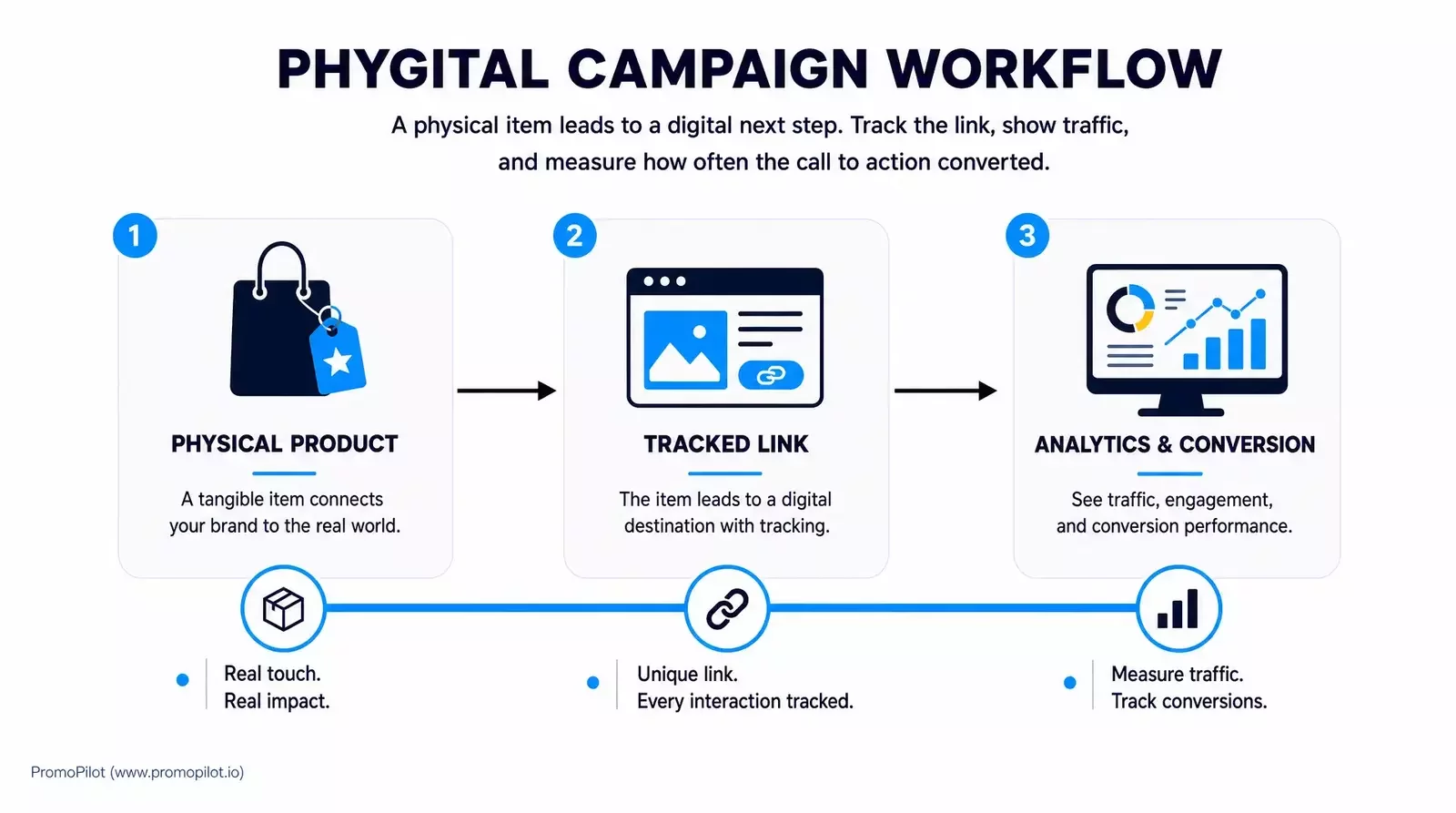
I know "phygital" sounds like industry jargon. Let's keep it simple: a physical product triggers a digital action.
That next step might be a landing page, a company store, a video, a redemption page, or a form. The point is simple. The product starts the interaction, then something measurable happens after it. This does two things for you and your customer:
- It proves that branded merch can drive behavior.
- It provides the brand with an opportunity to extend the brand experience from the physical realm into the digital.
Track the Traffic
This is where a lot of reps leave value on the table.
A QR code that goes to the homepage is fine. It is better than nothing. But you can get much more useful information if you add tracking to the link.
Google's own guidance says to always use utm_source, utm_medium, and utm_campaign. In normal language, that means the client can look at their website data and tie the visit back to the exact item or campaign that drove it.
Now the postcard, kit insert, event badge, catalog, or giveaway is not just a nice touch. It becomes part of a measurable campaign. And when you help the client do that, you position yourself as a solution partner who is outcome-oriented and not solely focused on the product itself.
If this sounds technical, don't worry. Your client's marketing team should be able to simply provide you with the URL the QR code should link to. All you should need to do is bring it up if your buyer doesn't. Worse case scenario, they have no idea what you're talking about but you've proven that you think beyond the product sale.
Package the Data Like a Service
Once the campaign is live, bring back something useful.
Show traffic to the digital destination (if your team built it). Show how often the call to action converted. Show heat maps if you have them. Show top-moving products, bottom-moving products, and categories that are underserved. That review changes the whole tone of the conversation. You are not guessing whether the campaign worked. You are reviewing what actually happened.
If you are selling your first tech-enabled experience and you want a safer starting point, I like partners like Outgage. They can help reps with both the digital destination and the reporting. That lowers the risk and makes the offer easier to explain.
Sell Services that Solve Real Problems
The best service offerings are the ones clients immediately understand.
A company store that lets HR send onboarding gifts without emailing customer service every time solves a real problem. A redemption experience tied to an event creates measurable engagement. Reporting that shows what happened after a campaign gives the client something useful to act on.
Your operations and e-commerce teams matter here. Don't forget to bring them into discovery early so the promise matches what can realistically be supported.
The goal is not to become a software company. The goal is to make branded merch easier to execute, easier to measure, and more connected to business outcomes.
Final Thought
Promotional products still earn attention because they are useful, visible, and memorable. That part is not going away.
What changes now is the layer you put around the product. Sell the outcome. Charge for the service work. Give the item a digital next step. Track what happens. Keep the offer simple enough for your team to support. Bring operations in early. Use simple workflows that your team can actually support.
The future belongs to the operators. I believe that more every year.
And if you are a sales rep, that should encourage you. Better systems do not take away your human touch. They give you more time to use it. Let the tools handle the repetitive and frequent or annoying work. You go build trust, solve problems, and sell more. 😊